
In Their Own Words: The Next Generation of Music Therapists


At Angelina’s Song, we believe in the power of music to comfort, connect and heal. An important part of carrying that mission forward is investing in the next generation of music therapists who will bring those experiences to children, families and individuals for years to come.
Through our scholarship program, Angelina’s Song provides financial support to students pursuing an education in music therapy. Our 2026–2027 scholarship recipients are at different points in their education, but they share a commitment to understanding how music can be used intentionally to meet the unique needs of the people they serve.
This year, we asked each recipient a different question about music therapy—from what happens inside a session to the experiences that have shaped their decision to enter the field. Their answers offer a glimpse into the thought, clinical skill and human connection behind a profession that can sometimes be difficult to understand until you see its impact firsthand.

Josie Frein
What’s one thing you wish more people understood about the difference between music therapy and simply listening to or making music?
For Josie, the difference lies not simply in the music being played, but in everything a trained music therapist is observing and doing while that music is happening.
During a session, a therapist may be listening for a client’s musical responses, watching for physical and emotional reactions, adapting the experience to support specific goals and building rapport—all at the same time. It is that intentionality and awareness that turns a musical experience into a therapeutic one.
“The music therapist's capacity to enter the music space while addressing such a variety of dynamics is what separates music therapy from pressing 'play' on Spotify.”
Behind what may appear to be a simple song is a therapist continuously responding to the person in front of them.
“It is a deeply human experience rooted in connection, dignity, and the undeniable power of music!”

Brianna Rempe
What have you learned about music’s ability to help you connect with someone when words may not be enough?
Music is often called a universal language, but Brianna has come to see that idea a little differently. Each person brings their own life experiences, memories and associations to music, meaning the same song or sound can hold an entirely different meaning from one person to another.
What we do share, however, is the experience of emotion—and music can provide a way to reach those emotions when finding the right words is difficult.
“I view music as the thing that bridges the gap and makes humans who we are.”
That ability to bridge a gap becomes especially meaningful when communication begins to break down.
“When there is a breakdown in communication with a friend, a family member, or a client music is my tool to help rebuild the communication between us.”

Jacob Roco
As a returning Angelina’s Song scholarship recipient, what can you do or understand about music therapy today that you couldn’t when you first began your studies?
Angelina’s Song has had the opportunity to follow Jacob’s education across several scholarship seasons. When he first began studying music therapy, he understood that music could help people, but he was still learning the how and why behind its clinical use.
After four practicums and three years of study, he now approaches music with the mindset of a clinician—considering a client’s needs, adapting in the moment and understanding the purpose behind the music he chooses.
“I’ve become much more confident in my ability to think like a clinician, adapt to the needs of a client, and understand the purpose behind the music I’m using.”
His education has also changed the way he understands music itself. Rhythm can connect to gait and natural movement, while singing builds upon elements already present in speech. Music is intertwined with how people move, communicate, regulate and connect from an early age.
That understanding has transformed the way Jacob views his future profession.
“I no longer see music therapy as simply using something enjoyable to make treatment better.”
Instead, he sees intentional uses of music supporting physical, cognitive, emotional, communicative and social needs.
“Today, I see music therapy not as an added bonus to someone’s care, but as a meaningful clinical discipline that can have an essential place in healthcare.”

Amy Orozco
If someone had never seen music therapy in action, how would you describe what happens during a session and what the therapist is working to accomplish?
There is no single picture of what a music therapy session looks like. As Amy explains, the experience changes based on the setting, the individual and the goals being addressed.
A client may sing, play an instrument or write a song alongside their therapist. From the outside, it can look like two people simply making music together. Underneath that experience, however, the therapist may be working toward goals involving communication, emotional expression, social skills, motor development or cognition.
“A session may look like we are just making music but so much more is happening.”
Amy has also seen the difference that incorporating music meaningful to the individual can make. Client-preferred music can encourage participation while creating an environment where therapeutic work feels safe and engaging.
“These moments are not just about our music skills, but about the comfort, courage, and hope it can bring to children."
Cody Alvord
What do you remember most about your first experience participating in or observing a music therapy session?
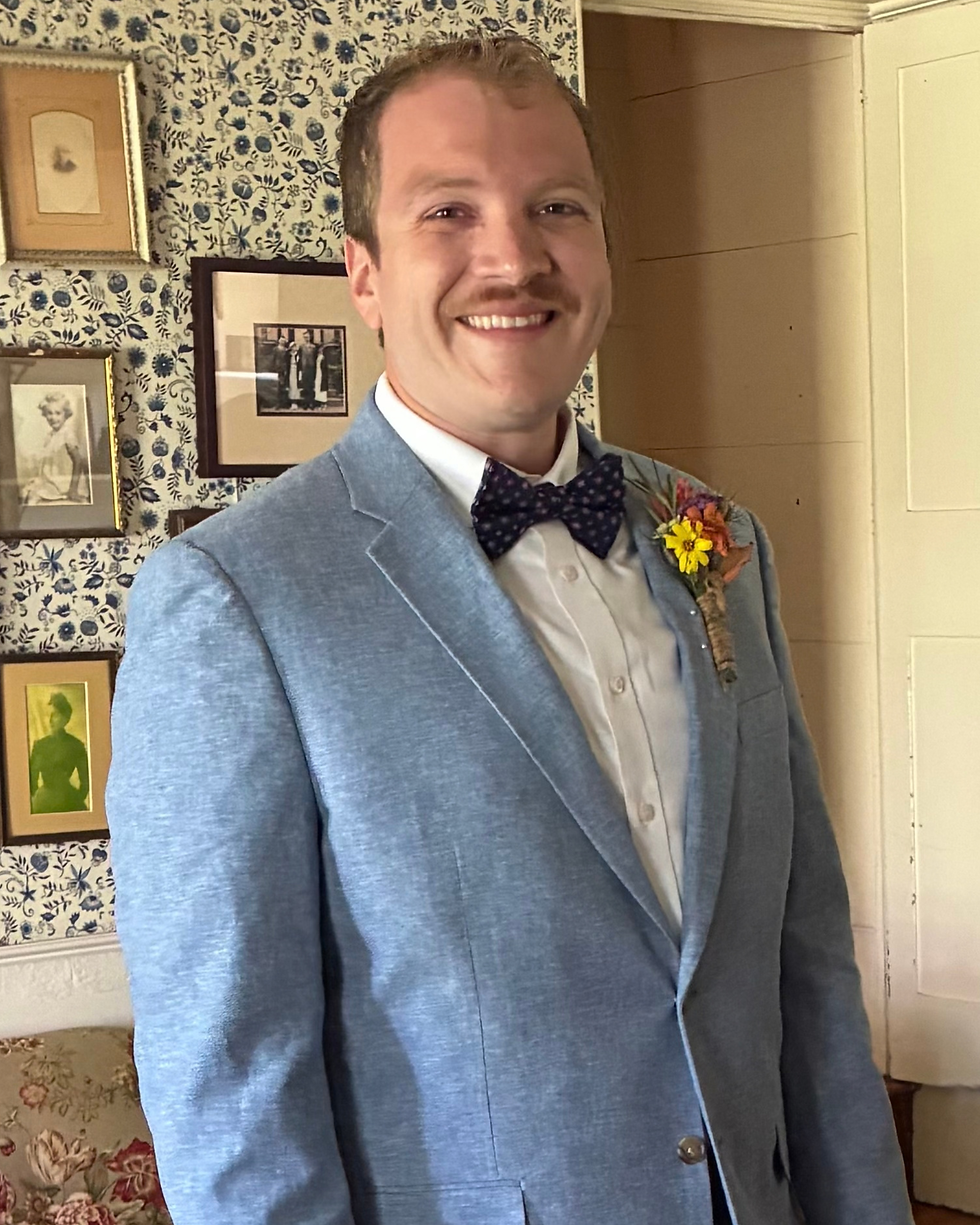
Cody’s first observation placement took him into clients’ homes alongside music therapist Lorie Parmalee, LCAT, MT-BC. One of those visits, with a young woman with autism spectrum disorder and her family, became an early lesson in just how individualized music therapy can be.
The session followed a familiar structure designed around goals including self-expression, communication and fine and gross motor skills. For movement experiences, the client selected traditional Indian music from a playlist she and her therapist had created together. Cody saw how honoring the client’s culture and musical preferences helped create greater comfort and engagement.
But one of the moments that stayed with him happened after the music stopped. The client’s father brought out coffee, and Cody, Lorie and the family sat together talking about the session and their day.
“At this moment, I was assured that I made the right decision to pursue music therapy as a career.”
The trust between therapist, client and family—and the impact that relationship could have—showed Cody the kind of work he wanted to pursue himself.
“Connecting with others, bringing joy and levity, and using music as a therapeutic tool for healing is what I strive to do as a music therapist.”

Lou Conrad
Was there a particular experience that made you realize music therapy was the career you wanted to pursue?
For Lou, there hasn’t been just one experience that has affirmed the decision to pursue music therapy. Practicums and outreach opportunities continue to provide reminders of why the field feels right.
But one of the earliest came during Lou’s first semester of practicum at a local nursing home, where Lou observed a board-certified music therapist working with residents.
Watching the residents respond to the music turned what had been a career choice into something much more personal.
“I remember this moment during the session where I got really emotional just watching how much joy the music brought to these residents.”
It became one of those rare moments of certainty.
“I had this moment where I just knew this is what I wanted to do for the rest of my life.”

Leecy Silk
What is one music therapy session or client interaction that has stayed with you, and why?
After working with a hospice client for several months, Leecy arrived for what would become their final session together. The client was nearing the end of life and had difficulty sitting upright or even lifting their head.
Leecy positioned herself and her guitar where the client could see them and began playing one of the client’s favorite songs. The response was small physically, but profound: the client deliberately worked to lift their head, made eye contact and smiled.
“I could see the strength that the music provided them as well as the comfort and joy.”
For Leecy, the experience became a lesson not only in what music can do, but in the role of the therapist. Sometimes the most important thing a therapist can do is create the opportunity and allow the music and the client to lead.
“The power of the music in that moment had very little to do with me and everything to do with what the client was experiencing.”
It also reinforced the privilege that comes with being invited into deeply vulnerable moments in another person’s life.
“Music has the power to forge the deepest and most authentic form of human connection and to take part in that and call it ‘school’ or ‘work’ is a beautiful thing that I will never take for granted.”
Supporting Their Next Chapter
Each of these students is still learning, practicing and discovering the kind of music therapist they hope to become. Yet their experiences already demonstrate something at the heart of Angelina’s Song: music can be much more than something we hear. In the hands of a trained and compassionate professional, it can become a way to communicate, move, remember, express, connect and heal.
Through the Angelina’s Song Scholarship Program, we are proud to play a small part in helping these future music therapists continue their education and prepare to bring that power to the people and communities they will one day serve.
Congratulations to our 2026–2027 scholarship recipients. We cannot wait to see where the music takes you next.


Comments